
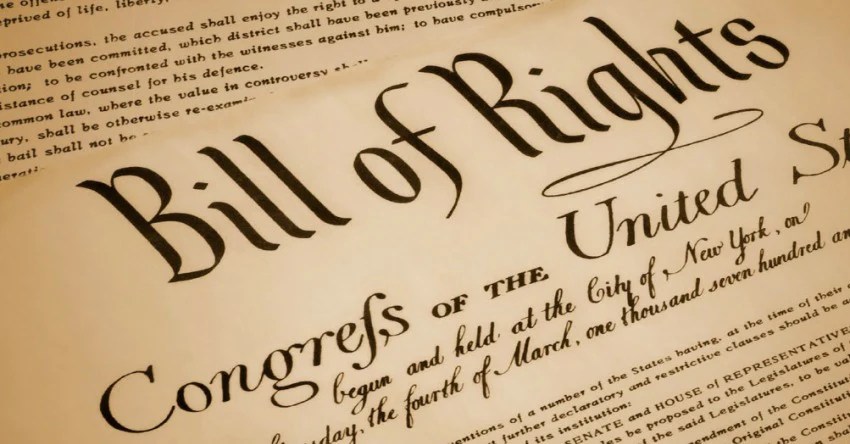
Two years ago, the Supreme Court made a judgment on a very interesting case regarding a public high school football coach Joseph Kennedy and his right to pray on the 50-yard line after a game. This case is known as Kennedy v. Bremerton School District 597 U.S. (2022) and was granted on January 14, 2022, argued on April 25, 2022, and decided on June 27, 2022. When the Bremerton School District, located in the state of Washington, announced that it would not renew Kennedy’s coaching contract after he knelt in quiet personal prayer in midfield after a game despite being warned not to, Kennedy sued in Federal Court, alleging that the District’s actions violated the First Amendment of the Bill of Rights Free Speech and Free Exercise Clauses. Once fired, Kennedy asked to be reinstated. The District Court denied this motion. Because the school acted to restrict Kennedy’s actions that were religious in nature, Kennedy’s right to freedom of religion was put into question.
Kennedy’s right to freedom of religion was violated when he was told not to pray on the field and when he was fired. Kennedy did not force his players to join him in prayer on the 50-yard line and discontinued his practice of leading players and staff in prayer in pre-game locker room meetings. Supreme Court Justice Neil Gorsuch said that any rule forbidding teachers from engaging in any religious speech was suppressing religious liberty rather than protecting it. He distinguished the Kennedy case at hand from other cases involving prayers at public school functions, such as Lee v. Weisman 505 U.S. 577 (1992), which regarded public prayer by clerics at school graduations, and Santa Fe Independent School District v. Doe 530 U.S. 290 (2000) where prayers were broadcast over a school loudspeaker system at games. Gorsuch chose to interpret the establishment clause through the lens of “original meaning and history,” citing Town of Greece v. Galloway 572 U.S (2014) upholding one’s right to prayer, and failed to find any evidence that coach Kennedy had coerced anyone to join him on the 50-yard line. Justice Sonia Sotomayor wrote the dissent and was joined by justices Stephen Breyer and Elena Kagan. They cited Engel v. Vitale 370 U.S 421 (1962), which invalidated teacher-led prayers in public schools. The key distinction in the Supreme Court Justice’s findings was that the majority characterized Kennedy’s prayers as private, while the dissenting minority thought they were public.
The case was ultimately decided with a 6-3 majority upholding the right of a public high school football coach to offer prayer at the 50-yard line after a game. Justice Neil Gorsuch authored the majority opinion of the Court, citing the Free Exercise and Free Speech Clauses of the First Amendment, which protects an individual engaging in a personal religious observance from government reprisal; The Constitution neither mandates nor permits the government to suppress such religious expression. This decision “is likely to have far reaching repercussions for future interpretations of the free exercise, establishment and free speech clauses of the First Amendment.”



 The Think Tank
Leave a comment