
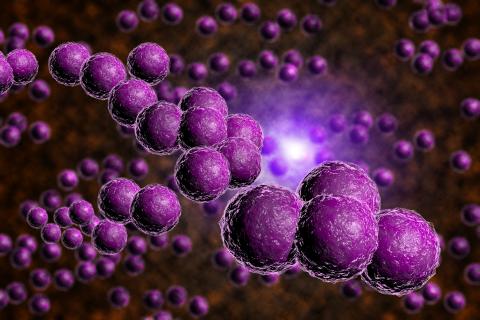
Overview:
MRSA (methicillin-resistant Staphylococcus aureus), only affects the skin in the integumentary system and can affect various parts of the skin namely the legs, buttocks, groin, and the back of the neck. MRSA is a staph infection which affects the skin causing swollen red bumps that look similar to pimples. The affected areas of MRSA may be warm to the touch, full of pus, and may cause a fever. MRSA typically spreads from skin to skin contact, sharing items between people who have had contact with MRSA, or touching infected surfaces. MRSA can be very dangerous since it is resistant to treatment with most antibiotics. One of the main reasons why MRSA exists today is due to the common overuse of certain antibiotics which causes it to be resistant and more difficult to treat.
Symptoms:
The first general symptoms of MRSA include painful red, swollen, painful bumps that look like pimples or insect bites. There is a chance that the infected area may be warm to the touch and full of pus. A fever may also accompany this infection. The red bumps can quickly turn into deep painful boils that require surgical draining. Even though MRSA typically remains confined to the skin, it can at times burrow deep into the body causing infections in the heart valves, bones, lungs, joints, blood stream, etc. These infections are potentially life threatening.
Treatment:
Since MRSA is resistant to most common antibiotics, it needs to be treated with specific antibiotics that are not methicillin resistant. Some commonly used antibiotics to treat MRSA include: Bactim, clindamycin, minocycline and doxycycline. When MRSA causes deep boils in the skin, surgical intervention is needed to drain these lesions.
Potential Risks or Complications of MRSA:
When MRSA burrows deep into the skin it can cause life threatening complications in the lungs, heart, blood vessels, and bones. It can compromise the lymphatic system causing a weakened immune system. It can lead to many serious diseases including pneumonia, sepsis, endocarditis, osteomyelitis, joint infections, etc.




 The Think Tank
Leave a comment