

The COVID-19 pandemic has resulted in an economic fallout in 2020 and has caused significant hardship to the world. Tens of millions of people lost their jobs in the first few months of the pandemic and high amounts of unemployment remained throughout the year. In the United States, millions of households reported that they had too little to eat and were behind on rent. All of these things happened despite the US government’s actions to provide relief to those in need. The economic effects of the pandemic were especially hard for blacks, Latinos, and people of color.
Many people didn’t even have sufficient food to feed their families. Aside from basic needs like paying for food, the mortgage or rent, many families faced difficulty to keep up with typical expenses such as car payments, medical expenses or student loans.
One of the major reasons why people were impacted economically was due to the high number of jobs that were lost due to COVID-19. Lockdowns, quarantine and mask mandates crippled businesses everywhere. This was especially true with the lowest-paying jobs. This impact happened to a large number of workers, especially minorities, who were disproportionately affected.
Many specific industries were affected economically from COVID-19. Different regions of the USA and the world saw specific economic impact based on the industry that dominated that region. For example, cities like Orlando, Las Vegas, Paris and Rome whose economies are dominated by tourism, saw significant losses as people could not travel. In fact the leisure and hospitality industry which includes people like restaurant workers and hotel workers were the hardest hit of all. This occurred globally as well as in the USA. Many countries who rely on outsiders traveling to their location were shut out and their workers paid the price. In many instances in the USA, the impact on jobs lost hit minorities and low level employees the hardest. These are the people who had the least amount of cushion to weather the blow that COVID-19 provided.
In other sectors where more highly educated people work, there was still an economic impact but not as dramatic. Many employees were able to work remotely, like those in the technology and finance industry. Also, many business owners and high level employees were able to benefit from the US government’s Paycheck Protection Program and the CARES Act. These programs allowed many US businesses to stay open and keep its workforce intact despite having decreased revenue.
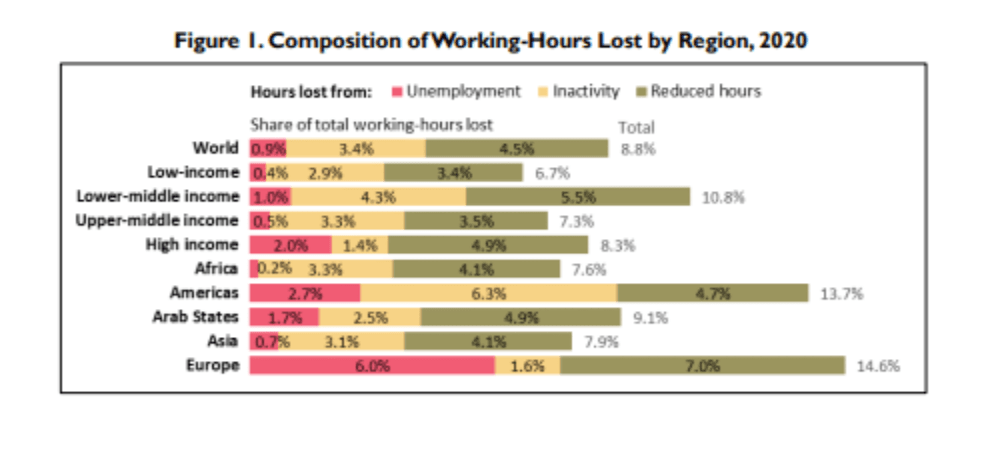
The effects of COVID-19 in the US mirrored in many ways what was happening globally. In fact, the Gross Domestic Product (GDP) of nearly all major countries took a major hit in 2020 and beyond. Countries like the United States, China, Great Britain, and Italy all saw significant decreases in their GDP in 2020 due to the impact of COVID-19. The composition of working hours lost by region in 2020 clearly shows the devastating impact of COVID-19 on all parts of the world (Figure 1).
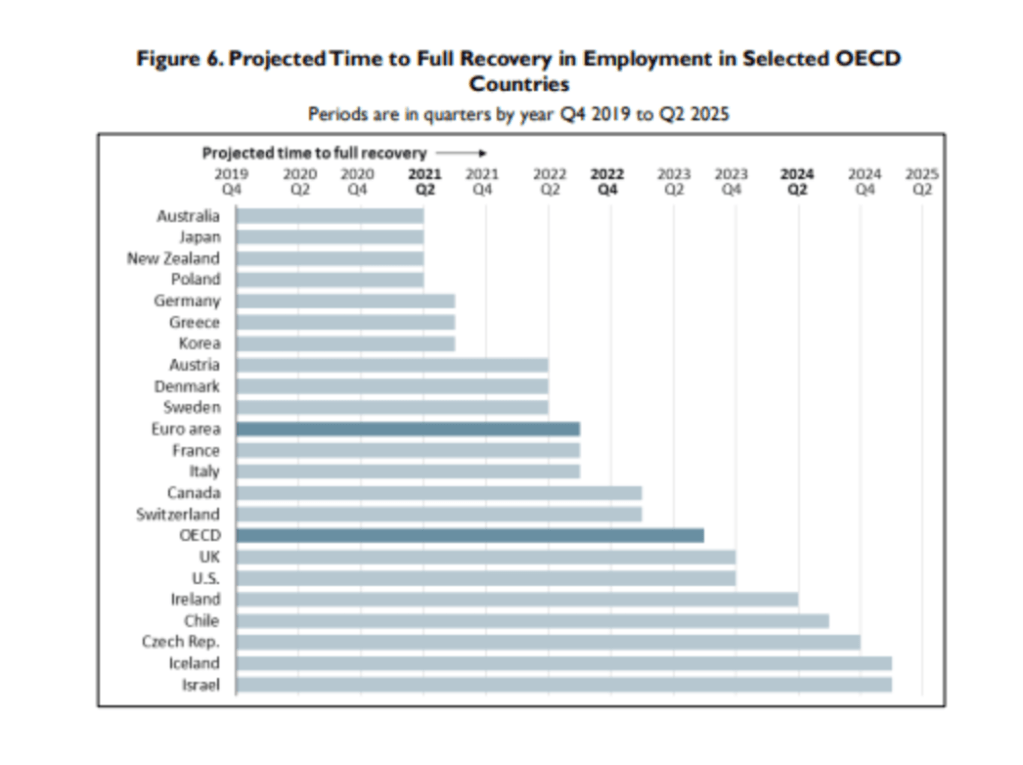
Thankfully, now that COVID-19 vaccine use is more available worldwide and the number of COVID-19 cases are better managed by healthcare professionals, countries around the world are starting to recover. The chart in Figure 6 illustrates the projected time to full recovery in employment in some of the major countries in the world. It is the hope that if the predictions hold true and COVID-19 stays in check that the global economy can rebound to where it was in 2019.

Check out my interview with an experienced doctor regarding this.




 The Think Tank
Leave a comment