Therefore, balancing the innovative potential of AI with the need for stringent privacy and security measures is a complex but eminently necessary task. Healthcare providers will need to invest heavily into advanced security technologies and in developing not just data protection policies, but comprehensive ones at that. Collaboration with cybersecurity experts and ongoing education for current staff about data security practices will prove to be crucial in maintaining a secure environment for the massive amount of sensitive and personal patient data. Beyond technical measures, ethical considerations also play a significant role in addressing both privacy and security concerns. Transparency about how patient data is used and ensuring patients have control over their data are two extremely essential components of ethical AI implementation. Informed consent and clear communication about data usage policies will help artificial intelligence systems build trust and ensure that patients are aware of and comfortable with how their information is being handled. On another note, AI systems in healthcare can unintentionally perpetuate biases present in their training data, leading to unequal treatment outcomes. For example, AI algorithms may perform less accurately for underrepresented demographic groups, such as racial or ethnic minorities, due to a lack of diverse data. In addition to this, the people in charge of training these systems may have some sort of bias whether that be gender, race, or ethnicity which can result in a faulty and inadequate model and would not be fit to be integrated into the healthcare world. For this reason, data presented to training these models should be very diverse and all those working on training artificial intelligence should have zero bias towards anything to maintain the most efficient and effective system and in turn create fairness and equitable access to quality care that can be of good use and help in the healthcare world. Another concern is the over-reliance on AI. The increasing integration of AI in healthcare poses the risk of over-reliance on these systems by medical professionals. This can be from a variety of reasons from being more efficient to workers not wanting to do the work themselves. These systems that could be trained to do one specific task may be used incorrectly by medical professionals and create major problems. In the medical world, every little detail can be the difference of life and death, from being able to walk or paralyzed from the neck down. For this reason, strict regulations and restrictions for AI systems should only allow models to be used for their specific purposes and never be used erroneously. While AI can assist in diagnosing diseases or recommending treatment plans, it is not infallible and may sometimes miss critical context that only human judgment can properly capture. Over-reliance on AI could lead to a decline in clinicians’ diagnostic skills and critical thinking, which are both essential for addressing unique patient needs or situations AI might not be designed to handle. Humans are able to think on the go and create new solutions; artificial intelligence on the other hand is only able to do what it has been trained to do. For example, if a new disease similar in symptoms but in other ways different than Covid breaks out and a patient is treated as they had Covid, it can result in a improper diagnosis and treatment and may even lead to the patient’s death. This is not the model’s fault as it was not trained about this disease or scenario happening. On the other hand, a medical professional would be able to treat the disease properly by taking the right precautions and evaluating the conditions and possible treatments which could be the difference between the patient’s life. Another large concern of artificial intelligence, not just in the medical world but in all places dealing with human labor, is job displacement. As AI systems become more sophisticated, there is an ever growing concern about job displacement in the healthcare sector. AI-powered tools can automate administrative tasks, analyze medical images, and even assist in robotic surgeries, potentially reducing the need for certain healthcare roles. Just like any other job sector, the more sophisticated a job, the harder to replace. AI may be able to replace an anesthesiologist in time but a surgeon will take far longer both due to the sporadic, quick decisions they need to make as well as lack of trust from patients. Full job displacement is very far from happening nor is it inevitable, but it is still a possibility sometime in the future. As of now, AI is a tool, and just that. They are used to assist people in their jobs and allow them to be better at it: whether that be open heart surgeries or calculating finances. It will take a very long time for artificial intelligent tools to become artificial intelligent jobs. Even if this theoretical society in which artificial intelligence takes over all jobs is very far down the road, it is still important to think about the effects. While AI poses great potential to improve efficiency, it also raises questions about how displaced workers will be re skilled and what new opportunities will emerge for healthcare professionals in a more AI-driven environment. Due to these concerns and obstacles, whether that be technological or ethical, the full integration of artificial intelligence, especially in the branch of personal information, will likely be a lengthy process and work almost like an exponential: increasing fast but getting incredibly slow to reaching one hundred percent. Overall, while AI holds immense promise for transforming healthcare, addressing these challenges will be essential to realizing its full potential while ensuring patient safety, privacy, and equity.
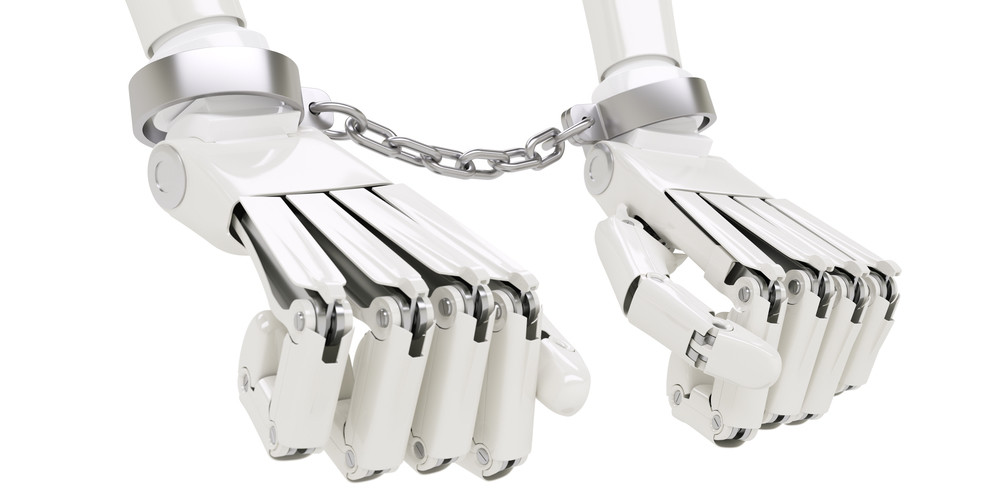
The Human Touch: Mitigating Risks of AI Dependency in Patient Care
Therefore, balancing the innovative potential of AI with the need for stringent privacy and security measures is a complex but eminently necessary task. Healthcare providers will need to invest heavily into advanced security technologies and in developing not just data protection policies, but comprehensive ones at that. Collaboration with cybersecurity experts and ongoing education for…
4–6 minutes
One response to “The Human Touch: Mitigating Risks of AI Dependency in Patient Care”
-

[…] The Human Touch: Mitigating Risks of AI Dependency in Patient Care […]
LikeLike



 The Think Tank
Leave a comment