
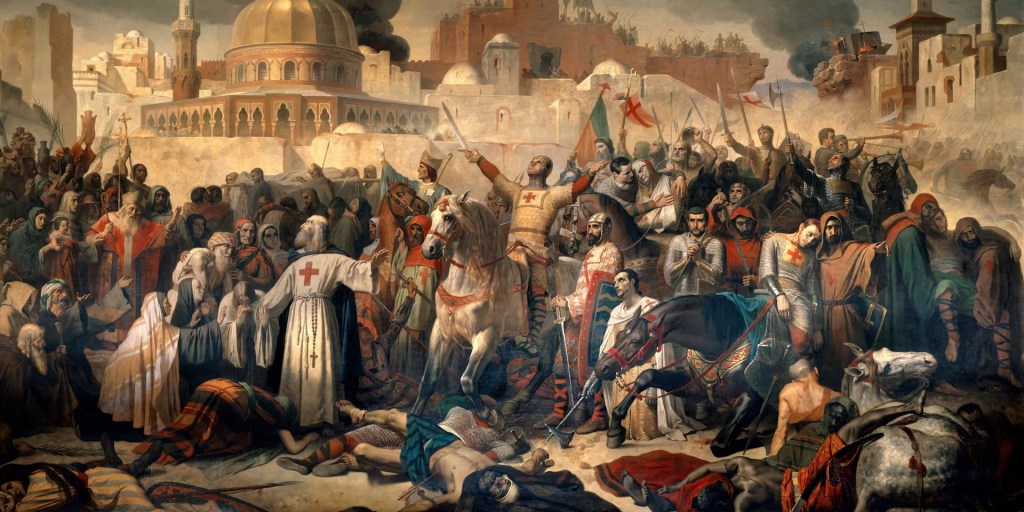
The Crusades was a mission orchestrated by the Church to reconquest and restore Christian control in the Holy Lands and to protect the Church’s interests, authority, and power with the motto “Liberate the Church of God.” Employed by the Church, the use of ecclesiastical exploitation, notably through Pope Urban II, created a strategic blend of false promises, privileges, and spiritual incentives that allowed them to rally and motivate its population to participate in the Crusades as well as leveraging the recruitment of mercenaries and methods of their payment along with the installment of religious apprehensions to increase participation, strengthening the Church’s overall power through multifaceted exploitation tactics. The leader of the Church, Pope Urban II, exploited his high, untenable position to create false promises, privileges, and spiritual incentives to motivate the people of the Church to participate in his plans for the Crusades. Furthermore, the Church leveraged the recruitment of mercenaries. It displayed their shrewdness by compensating them in payment from which the mercenaries themselves seized during the Crusades, allowing this strategic approach not only to incentivize the mercenaries to support but also facilitate the procurement of virtually cost-free manpower to bolster the Church’s power in the Crusades. In addition to promises and incentives, The Church placed religious and spiritual consequences upon those who opposed buttressing the Crusades and were administered as a potent tool to compel support, ultimately strengthening the Church’s overall power through the exploitation of threats.
Read the full version below:



 The Think Tank
Leave a comment