
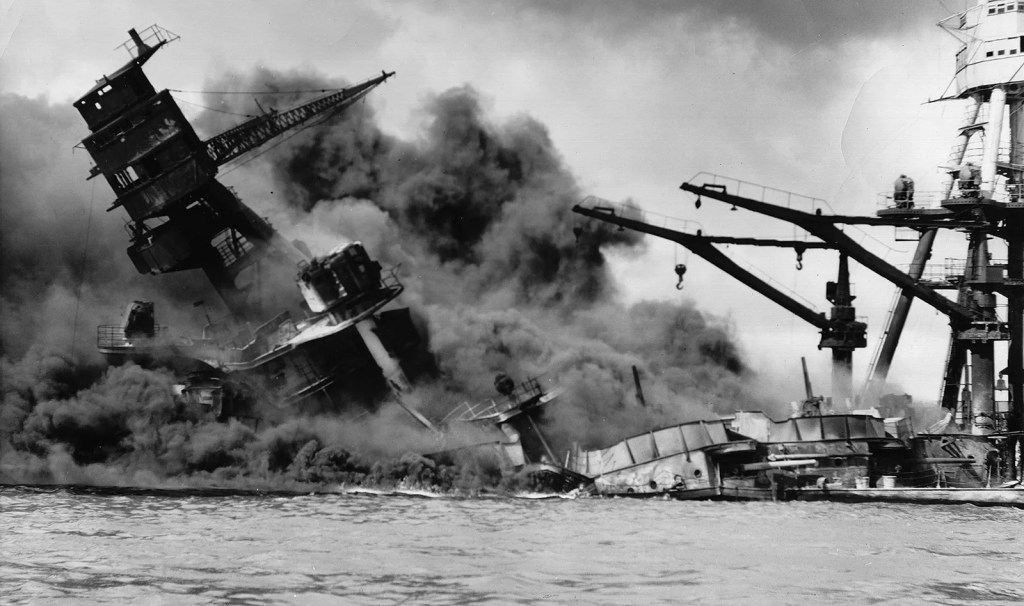
In 1941, the US possessed one of the best intelligence systems in the world, but still suffered one of the worst “surprise” attacks in history. The contradiction between intelligence capability and strategic failure raises questions about how intelligence is used, rather than simply its existence. Historians have long debated whether the December 7, 1941 attack on Pearl Harbor was the result of intelligence failure or a broader issue of how exactly that intelligence was utilized. Prior to World War II (WWII), the US had developed a complex system of communications intelligence (COMINT) that was capable of intercepting and decrypting foreign diplomatic messages. Via this system the US obtained access to a large amount of Japanese diplomatic communications, which provided significant insight into the country, especially relative to their relation with the US. This collection of the Japanese encryption system PURPLE’s intelligence was known as MAGIC. Despite this advantage, Pearl Harbor still struck the US as a devastating surprise. Prior to Pearl Harbor, American codebreakers successfully decrypted Japanese communications, but were forced to restrain their usage to protect the secrecy of MAGIC: their trump card. The strategic silence, although ultimately advantageous, allowed for preventable losses and exposed the moral and ethical costs of intelligence as a weapon. In short, the US had highly advanced COMINT systems that provided direct access and insight into Japanese diplomatic thinking, PURPLE, resulting in MAGIC and allowing information to go beyond pure speculation. MAGIC represented and demonstrated the effectiveness and strategic importance of COMINT as a tool for modern warfare. The distribution of MAGIC intelligence was highly restricted in order to preserve its secrecy, limited to high-ranking officials who each knew only a part of the whole. Moving down the ranks, this meant that codebreakers or even military commanders knew nothing or an inconsequential amount of intelligence. This limitation reflects the strategic decision to prioritize long-term intelligence advantages through secrecy over immediate effective use. The combination of restricted intelligence, analytical obstacles, and strategic assumptions contributed to the ultimate failure that was Pearl Harbor.
Read the full version below:


 The Think Tank
Leave a comment