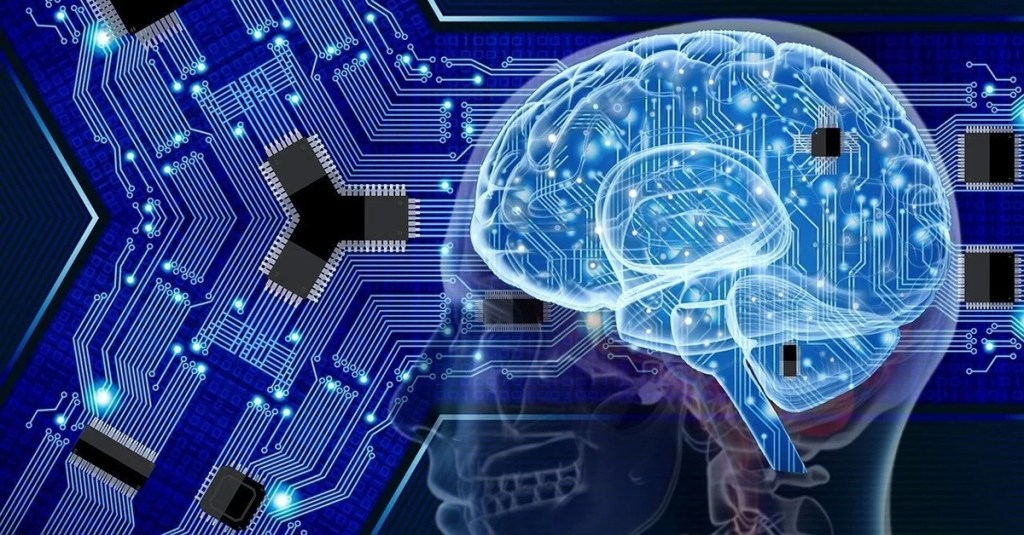
As technology seems to be increasingly beyond believable, scientists respond by creating even more. Recently, a group of scientists developed a brain-computer interface (BCI) to help people with paralysis communicate. Specifically among the paralyzed population, this BCI will prove beneficial for those whose speech muscles or nerve connections are too weak to produce clear speech. BCIs work by implanting tiny microelectrode arrays into the brain’s motor cortex, the area that controls movement (including speech movements). These microelectrodes record patterns of neural activity directly from the brain. A computer algorithm then uses machine learning to translate these neural signals into words or actions.
The system is able to decode speech by identifying neural patterns linked to phonemes, the smallest units of speech, and combining them into sentences. Studies have shown that BCIs can accurately decode attempted speech or handwriting movements, and even in some cases when no sound is produced.
This new research explores decoding “inner speech,” a term referring to one’s internal monologue. This will prove to be very helpful because attempting to speak can be slow, tiring, and uncomfortable for people with paralysis. As of now, the decoding of inner speech patterns are similar to attempted speech patterns but much weaker, meaning there is still room for improvement. For right now, decoding inner speech is still a concept.
Additionally, some concerns exist regarding the implementation of inner speech decoding. For example, what if the BACI accidentally decodes a thought the user did not intend to communicate? For this and similar reasons, researchers are proactively addressing privacy and ethical concerns. One solution being tested is using a “password” system in which inner speech is only decoded after the user imagines a specific phrase. Although this would prevent unintended thoughts from being decoded, entering the “password” hundreds or even thousands of times a day would become unbearable for the user.
BCIs are still experimental and not widely available but are expected to become released to the public in the next few years. Researchers also plan to study brain regions beyond the motor cortex, such as language and hearing areas, to improve accuracy. They also plan to extend the BCIs usage beyond decoding speech, hoping to better even more aspects of peoples’ lives.




 The Think Tank
Leave a comment