
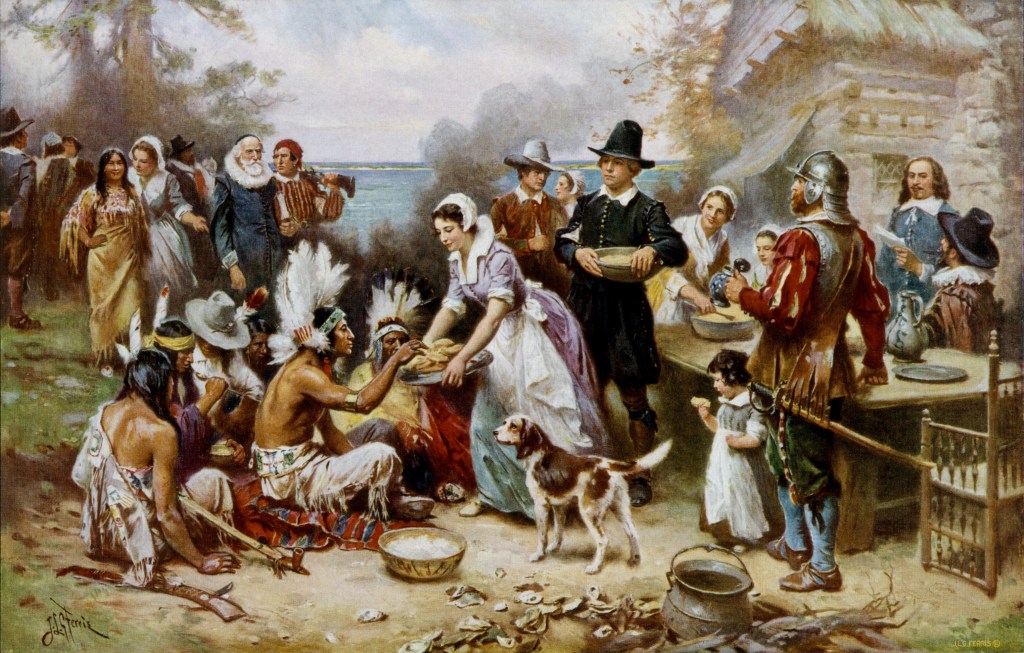
Each Thanksgiving celebrates the Pilgrims as America’s founders, but their fame rests on the graves of those Spanish and French explorers whose journeys sowed what the Pilgrims later reaped. In many classrooms, America’s story jumped from Columbus’s 1492 voyage to the Pilgrims 1620 landing at Plymouth, as if little of consequence occurred in between. Yet during this forgotten era, Europeans advanced through the Americas, reshaping indigenous societies as they established settlements. They brought new religion and culture, while introducing devastating diseases that destroyed the cultures of those who they first encountered. In A Voyage Long and Strange, Tony Horwitz argued that Americans ignored the centuries between Columbus and Plymouth to create a simplified national origin, mirroring a cultural preference for a singular heroic story rather than gradual and complex beginnings. The forgotten realities of conquest and loss undermined indigenous and European lives in the sixteenth century The myths created by Anglo-Protestant New Englanders and the ways the nation remembers their story ultimately has reduced other winners and losers to irrelevance. Long before the Pilgrims arrived, the forces of European expansion had already indelibly reshaped the continent, profoundly affecting Indigenous and European lives. In this context, Anglo-Protestants recast Plymouth as a symbol of heroic beginnings and shaped the narrative of national origin. Over the following centuries, symbols such as Thanksgiving and Plymouth Rock cemented this narrative into American memory and obscured the complex histories of winners and losers. Indigenous peoples were the clear losers, while the French and Spaniards initially triumphed; yet ultimately, New Englanders became the true winners, remembered as America’s idealized founders.
Read the full version below:


 The Think Tank
Leave a comment